
Louisiana Family Court Records
Louisiana family court records cover divorce filings, child custody orders, support cases, protective orders, and adoption proceedings across all 64 parishes. Each parish Clerk of Court stores these records at the local courthouse. You can search Louisiana family court records online through statewide portals or visit a clerk office in person. The Louisiana Supreme Court sets rules for all family law cases under Title IV of the District Court Rules. Whether you need a copy of a divorce judgment or want to check the status of a custody case, this page walks you through how to find and get family court records in Louisiana.
Louisiana Family Court Records Quick Facts
Where to Find Louisiana Family Court Records
Family court records in Louisiana are kept at two main levels. Parish Clerk of Court offices hold the full case files for every family law matter filed in that parish. These files have petitions, motions, answers, judgments, and all other papers filed during the case. The Clerk of Court in each of the 64 parishes serves as the official custodian of these records. Under La. R.S. 44:1, the custodian must present any public record to any person of the age of majority who asks for it. No reason is needed for the request.
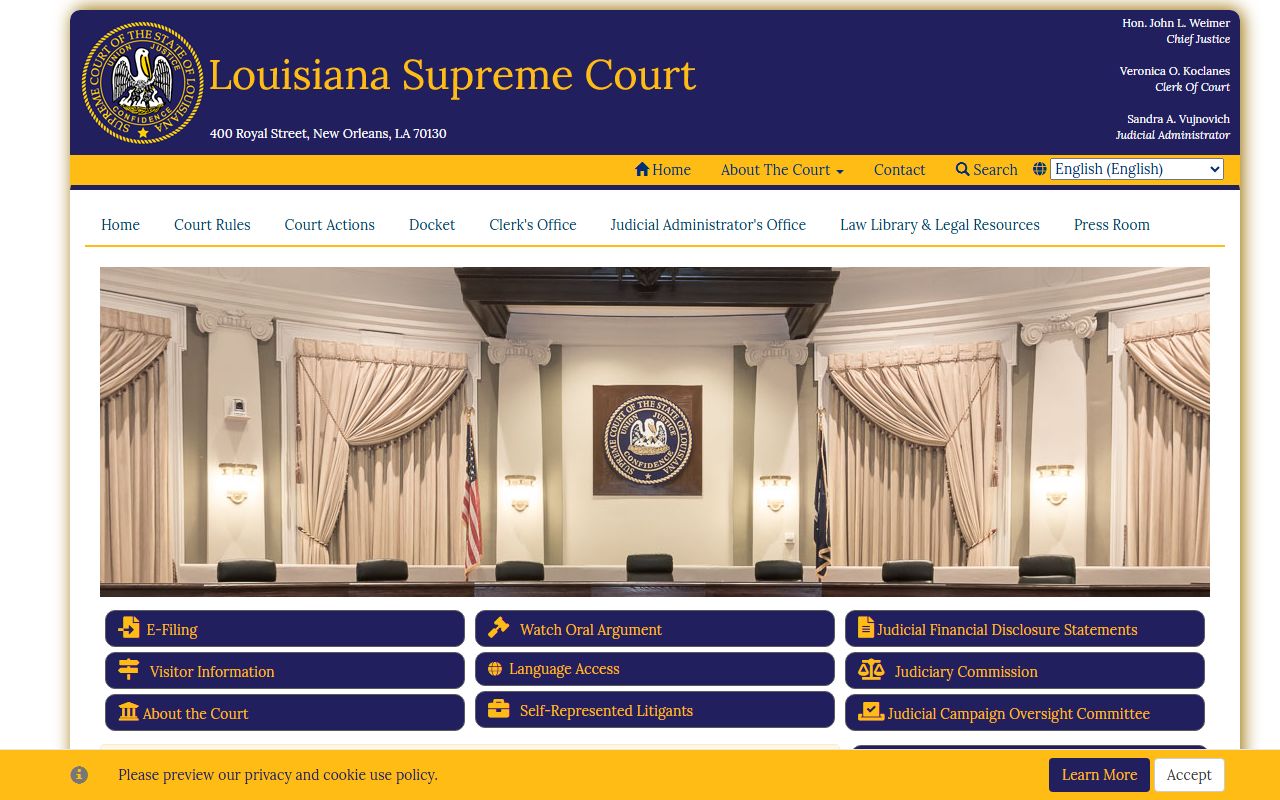
The Louisiana Supreme Court oversees the court system and sets the rules that all family courts must follow. Title IV of the District Court Rules defines family law proceedings to include all actions involving separation, divorce, or annulment, all child-related actions in both marital and non-marital cases, and all civil family law protective orders. Courts in parishes like East Baton Rouge, Jefferson, Orleans, and Caddo use court-appointed hearing officers and commissioners under La. R.S. 46:236.5 to help handle the volume of family court cases.
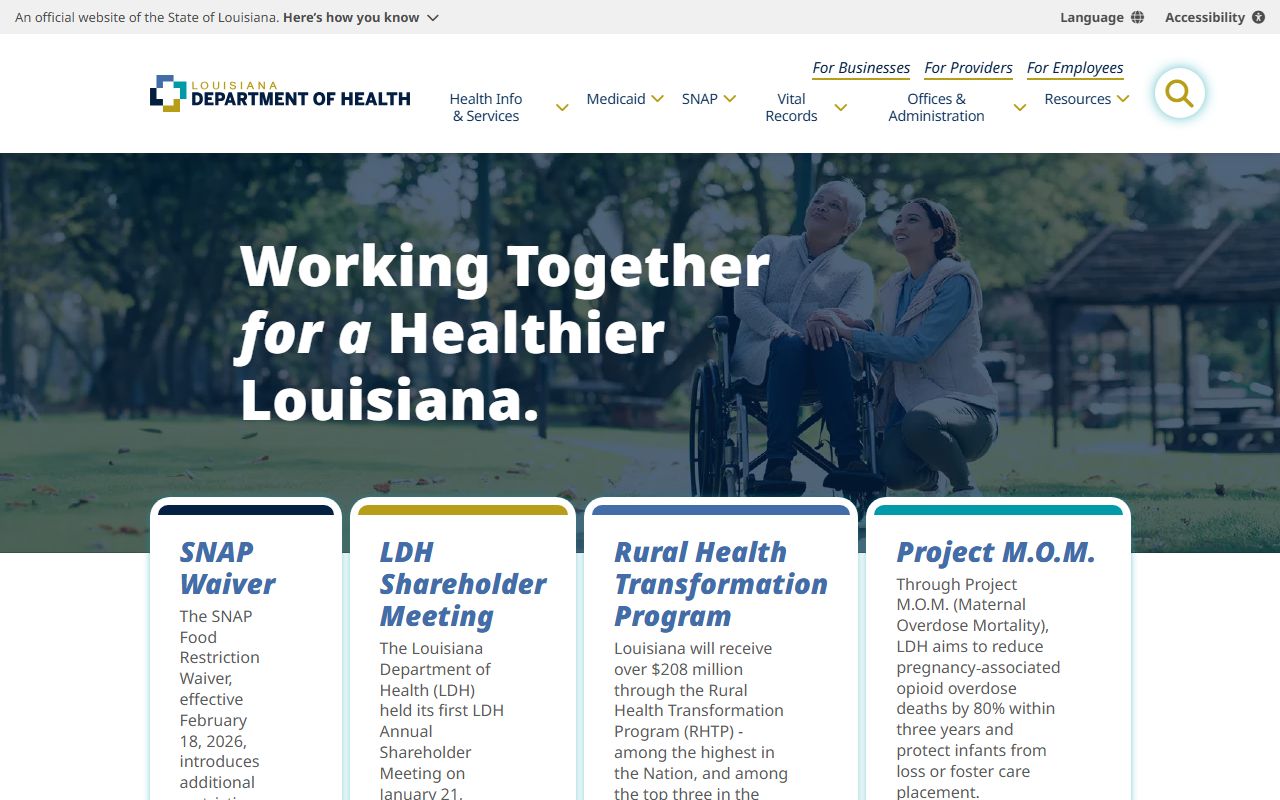
The Louisiana Department of Health also keeps vital records that tie to family court matters. Birth certificates, death certificates, and marriage certificates under 50 years old are held at the state level. These records often come into play in custody cases, paternity disputes, and divorce proceedings. The state office is at 1450 Poydras Street, Suite 400, in New Orleans. You can reach them at (504) 593-5100.
Note: Parish clerks handle full case files while the state health department holds vital record certificates.
Search Louisiana Family Court Records Online
Louisiana has several statewide portals for searching family court records online. The best starting point depends on what type of record you need and which parish filed the case. Some portals are free. Others charge a daily, monthly, or yearly fee. Most let you search by name or case number from home at any time of day.
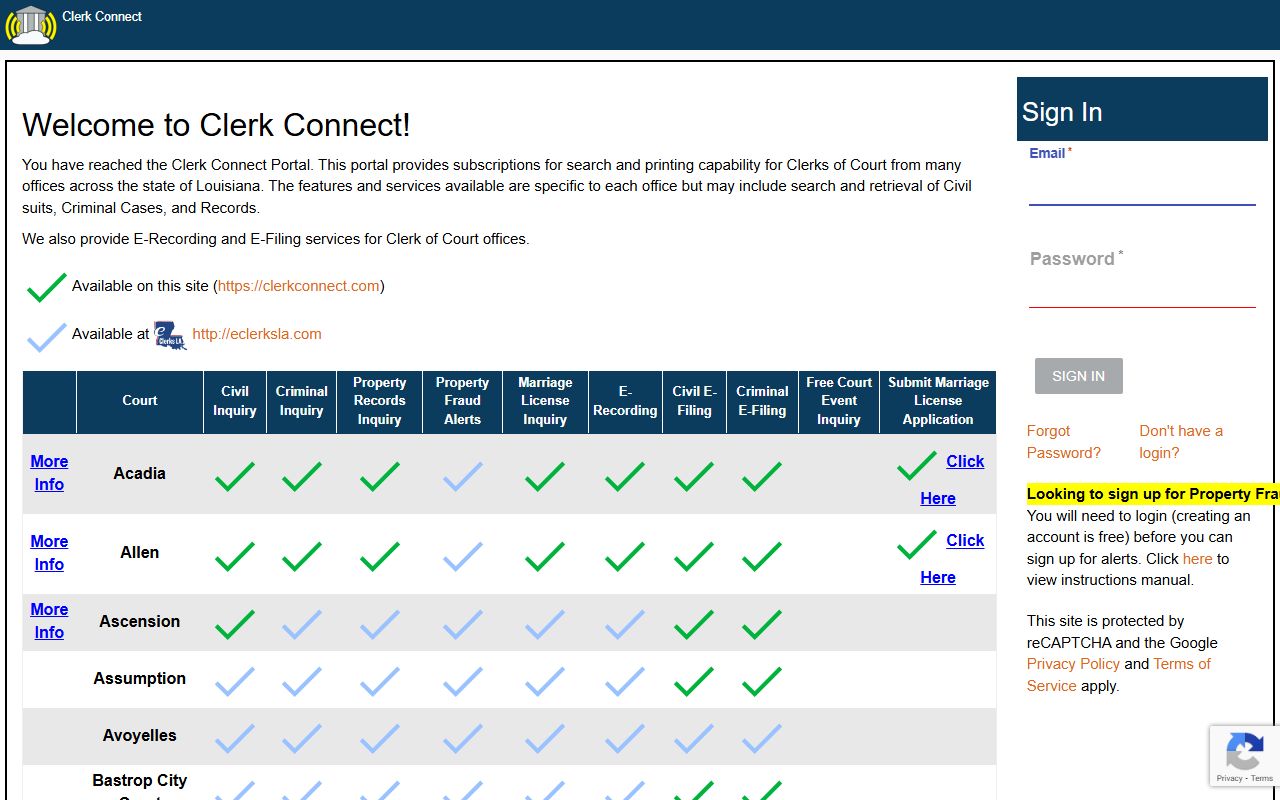
Clerk Connect is a multi-parish portal that gives access to civil suits, criminal cases, and property records. Parishes on Clerk Connect include Allen, Natchitoches, Claiborne, Jackson, Richland, Bossier, Caddo, Lafourche, Lincoln, and East Baton Rouge. Some of these parishes also offer e-filing and e-recording through the same portal. Subscription fees vary by parish. Caddo Parish charges $20 per day, $50 per month, or $500 per year. Lafayette Parish charges $10 per day, $25 per month, or $300 per year. The portal provides search and printing for records from many offices across the state.
The Louisiana Clerks Remote Access Authority provides secure online access to land records and marriage records across all 64 parishes. Account creation is free. While LCRAA focuses on land and marriage records, marriage records are often needed in family court matters like divorce and annulment cases.
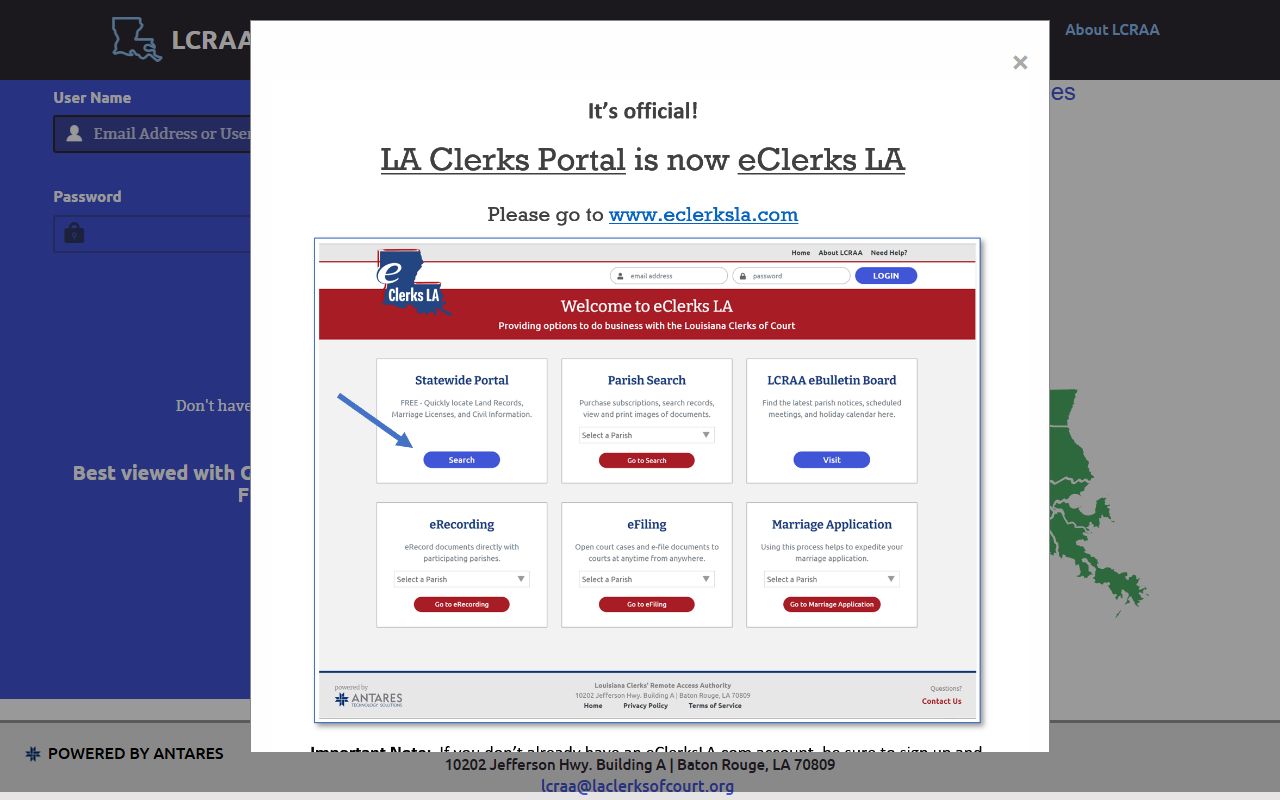
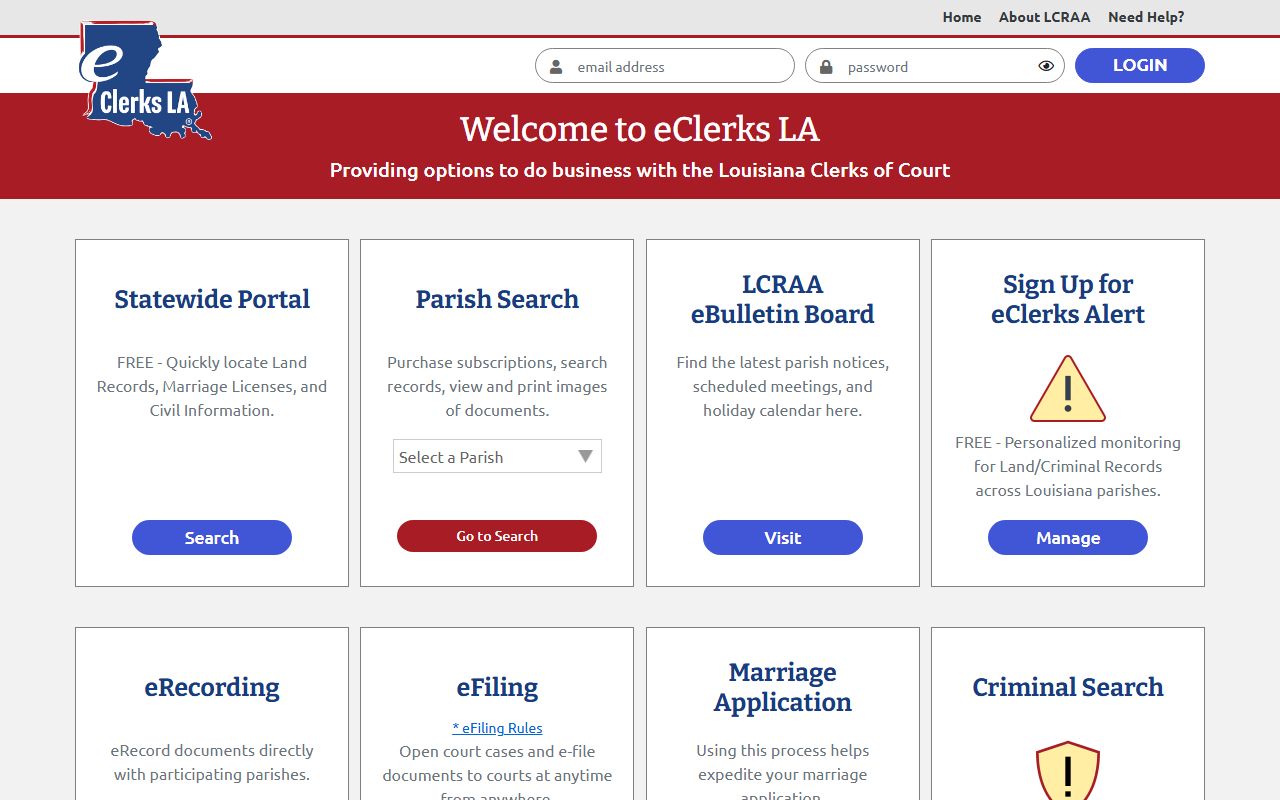
eClerks LA offers a free index search across all 64 parishes. This statewide portal covers criminal record searches, land record searches, and marriage license searches. The site also has a fraud alert service that monitors land records and sends alerts about potential fraudulent activity. For family court records, eClerks LA can help you verify basic case information before requesting full documents from the parish clerk.
Types of Louisiana Family Court Records
Family court records in Louisiana span a wide range of case types. Each type creates its own set of documents that the parish Clerk of Court stores and maintains. Louisiana family court proceedings follow the rules set out in Title IV of the Louisiana Supreme Court Rules for District Courts.
Divorce records make up a large share of family court filings. Louisiana allows no-fault divorce under Civil Code Article 102, which requires living separate and apart for 180 days after filing. If minor children are part of the case, the wait goes up to 365 days. Under Article 103, spouses who have already lived apart for the required time can get an immediate judgment. Louisiana is a community property state under Civil Code Article 2325, so property gained during the marriage is split equally unless the parties agree to different terms. Divorce case files hold the petition, the response, property settlement papers, and the final judgment signed by the judge.
Child custody and child support records are kept as part of the family court file. Custody orders spell out which parent has physical and legal custody. Support orders set the amount one parent pays based on Louisiana's income-based guidelines under state law. These records can be modified later if circumstances change, and each modification creates new documents in the case file.
Louisiana family court records also include:
- Protective orders under the Domestic Abuse Assistance Act (La. R.S. 46:2131)
- Paternity cases and acknowledgments
- Adoption proceedings (confidential under Louisiana Children's Code Articles 411-417)
- Name change petitions and orders
- Tutorship and guardianship filings
- Emancipation orders for minors
Note: Juvenile records, adoption files, and certain custody evaluations are confidential and may need a court order to access.
Louisiana Protective Order Registry
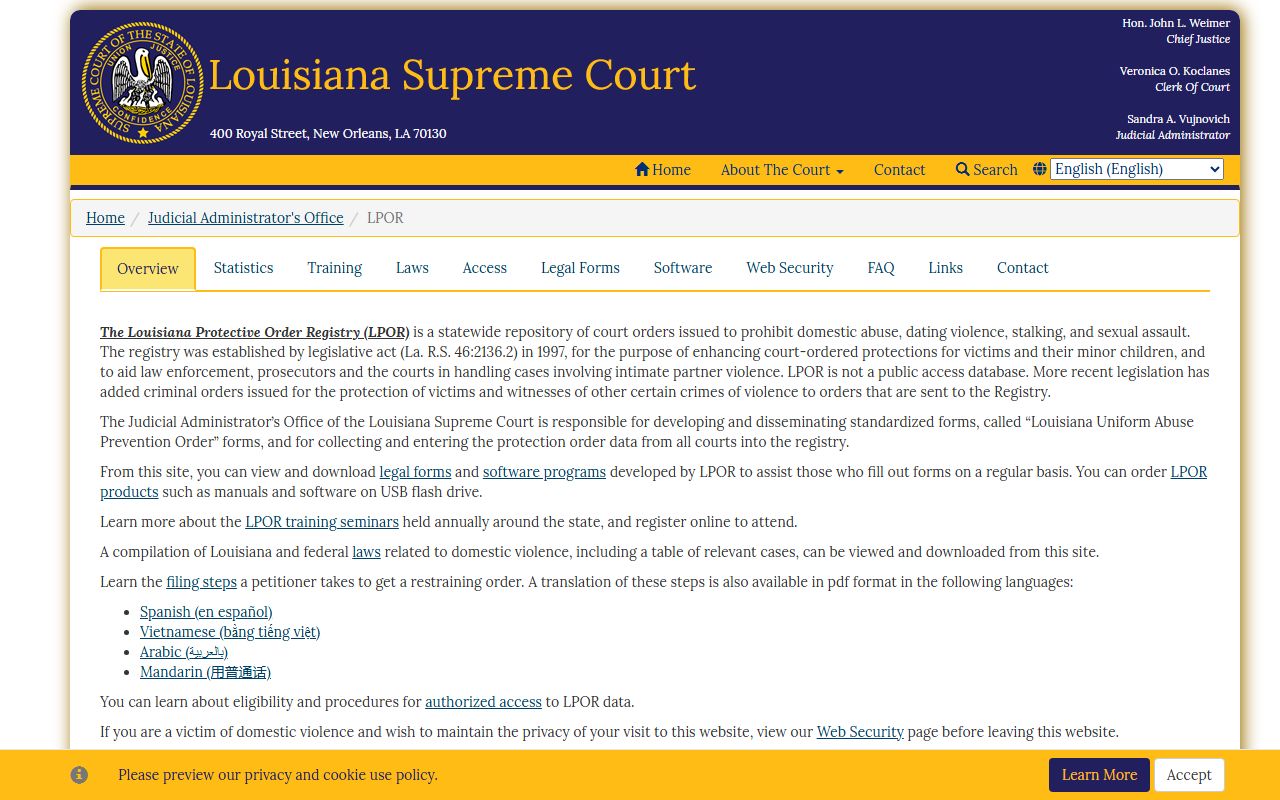
The Louisiana Supreme Court manages the Louisiana Protective Order Registry (LPOR). This is a statewide database of all active protective orders. Law enforcement uses it to verify orders quickly. The registry tracks orders issued under the Domestic Abuse Assistance Act (La. R.S. 46:2131), the Post-Separation Family Violence Relief Act, and Uniform Abuse Prevention Orders.
Gwen's Law (La. R.S. 14:32) adds an extra layer of protection in family court cases involving domestic violence. It requires an additional bail hearing for domestic violence arrestees before release. Judges must look at the threat level, personal history including substance abuse and prior threats, and flight risk. Family court records tied to protective orders are part of the broader family case file at the parish level.
Historical Records in Louisiana
Older family court records in Louisiana may be held at the Louisiana State Archives run by the Secretary of State. The archives have birth records over 100 years old, death records over 50 years old, and Orleans Parish marriage records over 50 years old. If you need a very old family court record, the archives may be the right place to start. Parish clerks also keep historical records at their offices, though some older files may be stored off-site.
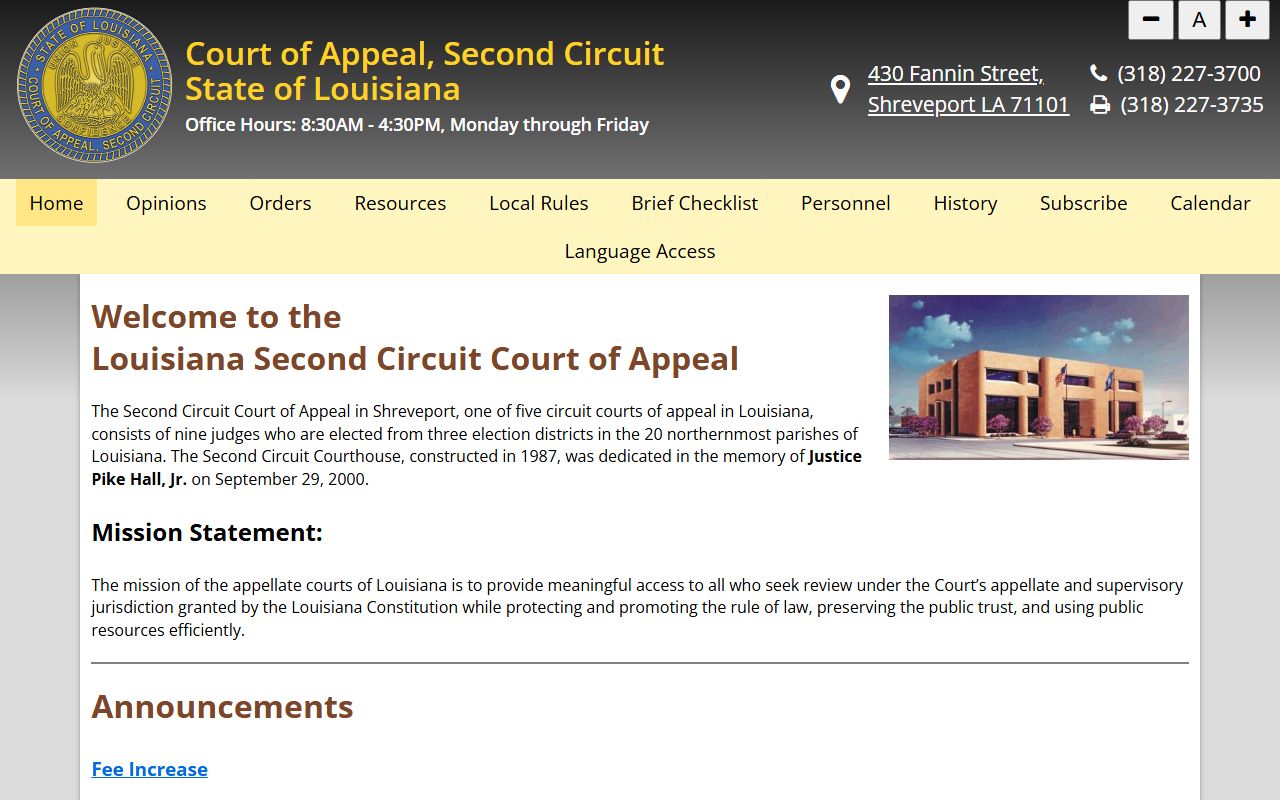
The Louisiana Second Circuit Court of Appeal in Shreveport handles appeals from family court cases in the northern part of the state. Appellate records can show how courts have ruled on custody disputes, support amounts, and property division questions. These decisions sometimes set the standard that other family courts in Louisiana follow.
Family Court Record Fees in Louisiana
Fees for family court records vary by parish. Most clerks charge between $0.50 and $1.00 per page for standard copies. Certified copies cost more. In Jefferson Parish, a certified copy runs $5.00 plus copy costs. In Orleans Parish, uncertified copies are $1.00 per page and certified copies are $3.00 per page. Calcasieu Parish charges $5.00 plus $0.25 per page for certified documents.
Online portal fees also differ. Orleans Parish charges $20 for 24-hour access, $100 per month, or $700 per year. Bossier Parish Clerk Connect costs $85 to set up and $35 per month after that. Rapides Parish RAPID E-Search runs $20 per day, $60 per month, or $600 per year. Some parishes like those on eClerks LA offer free basic index searches with no subscription needed.
If you need to file a new family court case, filing fees range from about $200 to $400 in most parishes. Calcasieu Parish charges $27 for a family court divorce packet. The civil filing advanced deposit in Iberia Parish is $350. Fee waivers are available for people with low income. You can ask the court to waive fees by filing an In Forma Pauperis form.
How to Get Copies of Family Court Records
You can get copies of Louisiana family court records in several ways. In-person visits work best when you need certified copies or want to see the full file. Most clerk offices are open Monday through Friday from 8:30 AM to 4:30 PM. Bring a valid photo ID. Staff can search by name or case number.
Mail requests are another option. Send a written request to the parish Clerk of Court with the names of the parties, the case type, the approximate date, and your payment. Include a self-addressed stamped envelope. Each parish has its own mailing address listed on their website. Phone requests get limited help since most clerks want a written request for copies, but you can call ahead to check fees and find out what you need.
To request Louisiana family court records, you typically need:
- Full names of the parties in the case
- Type of record (divorce, custody, support, etc.)
- Approximate date of filing
- Case number if you have it
- Payment for copy and search fees
Legal Help for Family Court Cases in Louisiana
Several groups offer free or low-cost legal help with family court cases in Louisiana. Southeast Louisiana Legal Services handles family law cases for people with low income in the eastern part of the state. Acadiana Legal Service Corporation covers the western parishes. Call 211 to find legal aid near you.
La. R.S. 13:587.4 permits the creation of specialized family court divisions in Louisiana. Some parishes have dedicated family court sections with judges who hear only family law matters. East Baton Rouge Parish has a dedicated family court on the fourth floor of the courthouse at 300 North Boulevard. Their self-help center is open Tuesday and Thursday from 10:00 AM to 2:00 PM. Under La. R.S. 13:1821, victims of domestic violence in family law proceedings can request address confidentiality to stay safe during their case.
Are Louisiana Family Court Records Public
Most family court records are public in Louisiana. Under La. R.S. 44:1, the custodian must show any public record to anyone who asks. You do not need to be a party in the case. You do not need to give a reason.
Some family court records are not public. The Louisiana Children's Code (Articles 411-417) makes juvenile delinquency records, adoption proceedings, and child in need of care cases confidential. Paternity records may also be restricted. Certain custody evaluations and mental health reports in family court files can be sealed by a judge. Under La. R.S. 40:41, birth and death records at the vital records office may only be obtained by certain related individuals. But the vast majority of family court case files at the Clerk of Court are open to all.
Browse Louisiana Family Court Records by Parish
Each parish in Louisiana has its own Clerk of Court who keeps family court records. Pick a parish below to find local contact info, fees, and search tools for that area.
Family Court Records in Major Louisiana Cities
Residents of major Louisiana cities file family court cases at their parish district court. Pick a city below to learn about family court records in that area.