
New Orleans Family Court Records
New Orleans family court records are kept by the Orleans Parish Civil District Court at 421 Loyola Avenue. The city and parish share the same lines, so all family law cases go through one court. You can search for divorce filings, custody orders, child support cases, and protective orders through the clerk's office or its online tools. New Orleans has a dedicated domestic and family docket that handles these cases. The Civil District Court Clerk gives out copies of all family court records on file. Both in-person and remote access are set up for the public to use.
New Orleans Quick Facts
Orleans Parish Family Court System
In Louisiana, family court records are handled at the parish level. New Orleans is unique because the city and Orleans Parish cover the exact same area. That means every family law case filed by a New Orleans resident goes to the Orleans Parish Civil District Court. The city courts in New Orleans do not handle family matters at all.
The First City Court at 421 Loyola Ave Room 201 deals with small claims and evictions. Call (504) 407-0400 for that court. The Municipal Court at 727 S Broad Street handles traffic tickets and city ordinance cases. Its number is 504-658-9700. Neither of those courts can take a divorce filing, a custody case, or a child support matter. All family law goes to the Civil District Court.
The Civil District Court has a dedicated Domestic and Family Docket, known as Docket 5. You can reach that section at (504) 407-0046. Docket 5 hears divorce cases, custody disputes, child support matters, and related family issues. This is where your family court records will be created and stored.
Note: The First City Court and Municipal Court cannot handle any family law cases in New Orleans.
New Orleans Family Court Records Office
The Orleans Parish Civil District Court Clerk is the main office for all family court records in New Orleans. The clerk's office takes new filings, stores case documents, and hands out copies. It sits in the Central Business District near city hall.
| Office | Clerk of Civil District Court |
|---|---|
| Address | 421 Loyola Avenue, Room 402 New Orleans, LA 70112 |
| Phone | (504) 407-0000 |
| cdcclerk@orleanscdc.com | |
| Family Docket | (504) 407-0046 (Docket 5) |
| Website | orleanscivildistrictcourt.org |
The courthouse has metered street parking and garages close by. RTA streetcar and bus lines serve the area. Security checks all visitors at the front door, so bring a valid photo ID. The clerk's office is on the fourth floor in Room 402. Hours run Monday through Friday, 8:30 AM to 4:30 PM.
Search New Orleans Family Court Records Online
The Orleans Parish Civil District Court Clerk runs an online records portal. You can look up family court cases from home using the Remote Access system on the clerk's website. Search by name or case number. The system shows basic case data like filing dates, parties, and docket entries. It covers divorce, custody, and other family law filings.
The clerk's main site at orleanscivilclerk.com has a page for online records access. You can browse case information through the online records section to find family court records filed in New Orleans. Some records may need a paid account for full document viewing. Basic search results are free to browse.
Under the Louisiana Public Records Law, La. R.S. 44:1, most court records are open to the public. That includes divorce filings, custody orders, and child support judgments. Some records get sealed by court order, and adoption files are kept confidential under the Louisiana Children's Code Articles 411 through 417. But the bulk of family court records in New Orleans are public and searchable.
New Orleans Family Court Filing Resources
The Orleans Civil Clerk website provides access to case records and filing information for New Orleans family court cases.
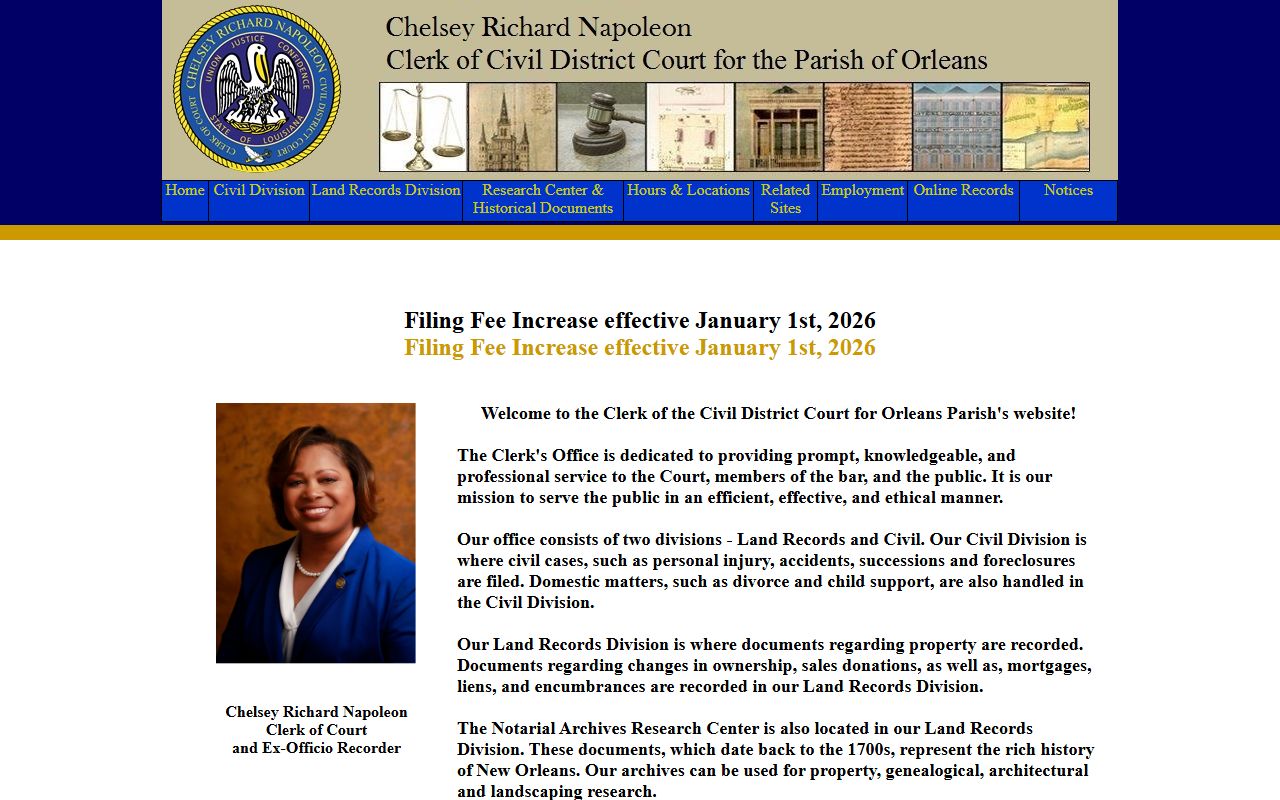
This portal lets you look up case details, check filing dates, and find docket entries for family law matters in Orleans Parish. You can also find contact information and office hours for the clerk.
The Orleans Parish Civil District Court site has court calendars, judge assignments, and rules that apply to family cases on Docket 5. Between the two sites, you can get most of the information you need about a family court case in New Orleans before you even visit the courthouse.
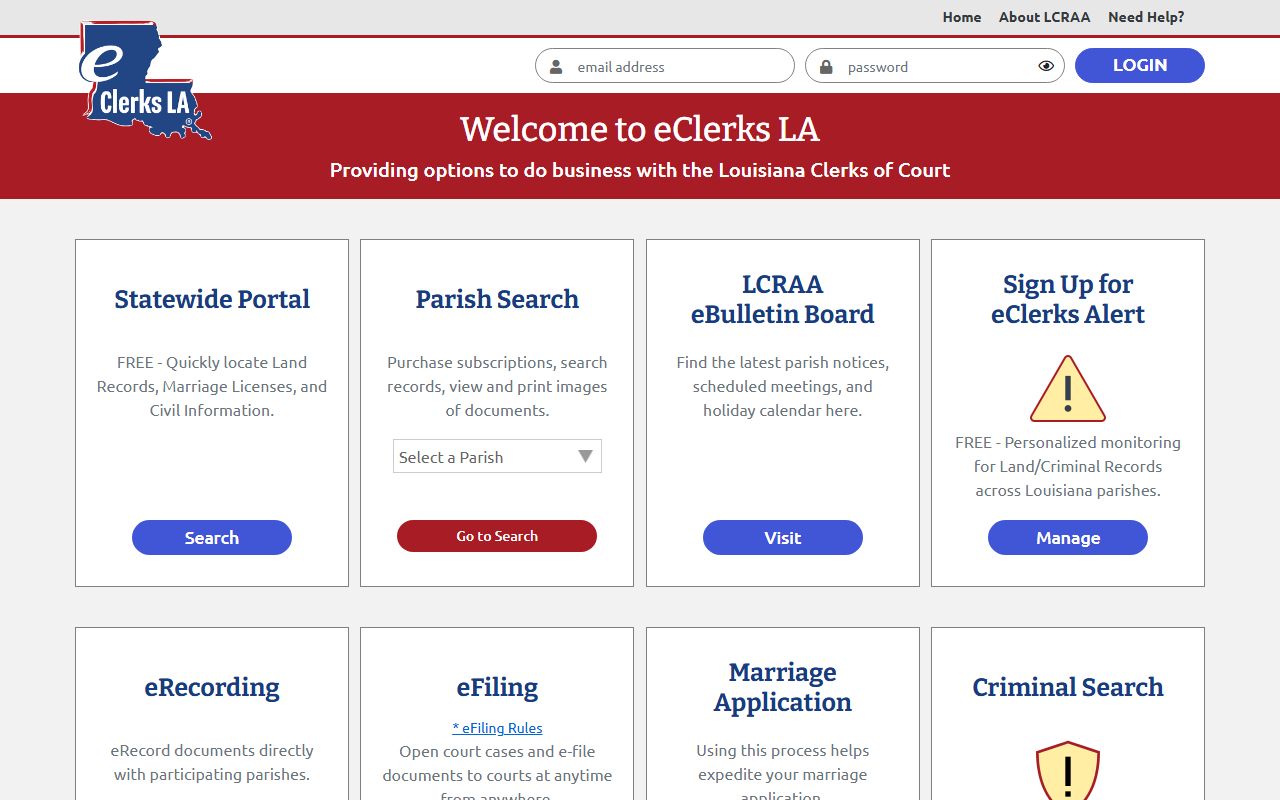
Louisiana also runs a statewide eClerks system that covers multiple parishes. This can be useful if your case involves records from outside Orleans Parish or if you need to check filings in a nearby area.
Note: Some full document views on the remote access system may require a paid subscription.
Divorce and Custody Records in New Orleans
Divorce is one of the most common family court records filed in New Orleans. Under Louisiana Civil Code Article 102, you can file for divorce and then wait 180 days before the court grants it. If you have minor children, the wait is 365 days. Under Article 103, if you have already lived apart for the required time, you can get an immediate divorce judgment.
Custody records in New Orleans are part of the same case file when tied to a divorce. If parents are not married, custody gets filed as a separate case. Louisiana uses Civil Code Articles 131 through 136 for custody decisions. The court looks at the best interest of the child. All custody orders become part of the family court record at the Orleans Parish Civil District Court.
Child support orders are also filed here. Louisiana follows La. R.S. 46:2131 and related statutes for support calculations. The court uses income shares to set support amounts. These orders are part of the public record. You can get copies from the clerk.
Louisiana is a community property state under Civil Code Article 2325. Property gained during the marriage is split equally unless the parties agree otherwise. Property division records are in the divorce case file and open for public review.
New Orleans Protective Order Records
Protective orders are a key part of family court records in New Orleans. When someone files for a protective order against a family or household member, that case goes to the Civil District Court. The filing creates a record that stays on file with the clerk.
Louisiana keeps a statewide Protective Order Registry. This database tracks all active protective orders across the state, including those filed in New Orleans. Law enforcement can check this registry in real time. The registry helps officers confirm if a protective order is in place during a domestic call.
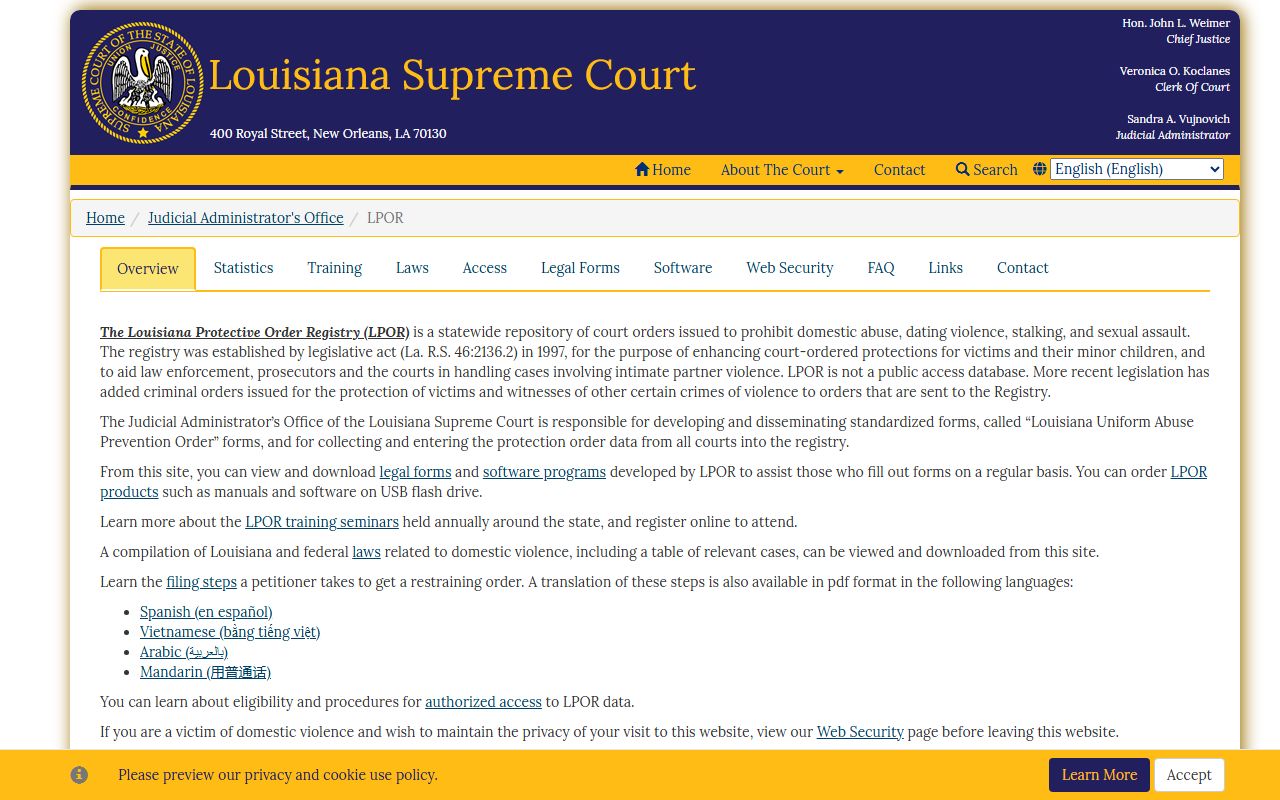
The registry is an important tool for public safety in New Orleans. Protective order records tie into the broader family court record system at the parish level. If you need to check on an active order, the clerk's office can help, or you can ask law enforcement to verify through the state registry.
Legal Help for Family Court in New Orleans
Several groups in New Orleans offer help with family court cases. Southeast Louisiana Legal Services provides free legal aid to low-income residents. They handle divorce, custody, and support cases. If you qualify based on income, they can represent you or help you fill out forms.
The New Orleans Bar Association runs a lawyer referral service. You can get a first meeting with a family law attorney at a reduced cost. The Louisiana State Bar Association also has a statewide referral line. For people filing without a lawyer, Louisiana Law Help at louisianalawhelp.org has step-by-step guides and forms. The site covers divorce, custody, child support, and protective orders.
If you cannot afford filing fees, you can ask the court for a fee waiver. File an In Forma Pauperis form with your case. The judge reviews your income and decides if you qualify. This applies to all family court cases in New Orleans.
Note: The court staff cannot give legal advice, but they can tell you which forms to file.
Orleans Parish Family Court Records
All family court records in New Orleans go through Orleans Parish. For full details on the parish court system, fee schedules, related records, and more resources, visit the Orleans Parish page.
Nearby Cities
These cities near New Orleans also have family court records pages with local court information and parish-level filing details.